

16
2026
-
10
How to Choose a Hybrid VTOL UAV for Mapping, Surveillance, and Long-Range Operations
A practical guide to selecting a hybrid VTOL UAV for mapping, surveillance, and long-range operations by matching mission requirements with payload, endurance, launch and recovery, sensors, data links, weather capability, and supplier validation.


Author:
How to Choose a Hybrid VTOL UAV for Mapping, Surveillance, and Long-Range Operations
Hybrid VTOL UAVs are a practical choice when a mission needs both runway-independent operation and efficient fixed-wing flight. The right aircraft is not selected by wingspan or advertised endurance alone. It should be matched to the complete mission.
This guide explains how to evaluate a hybrid VTOL UAV for mapping, surveillance, and long-range operations using FEIYIDA VTOL platforms as product references.
1. Start With the Mission, Not the Aircraft Category
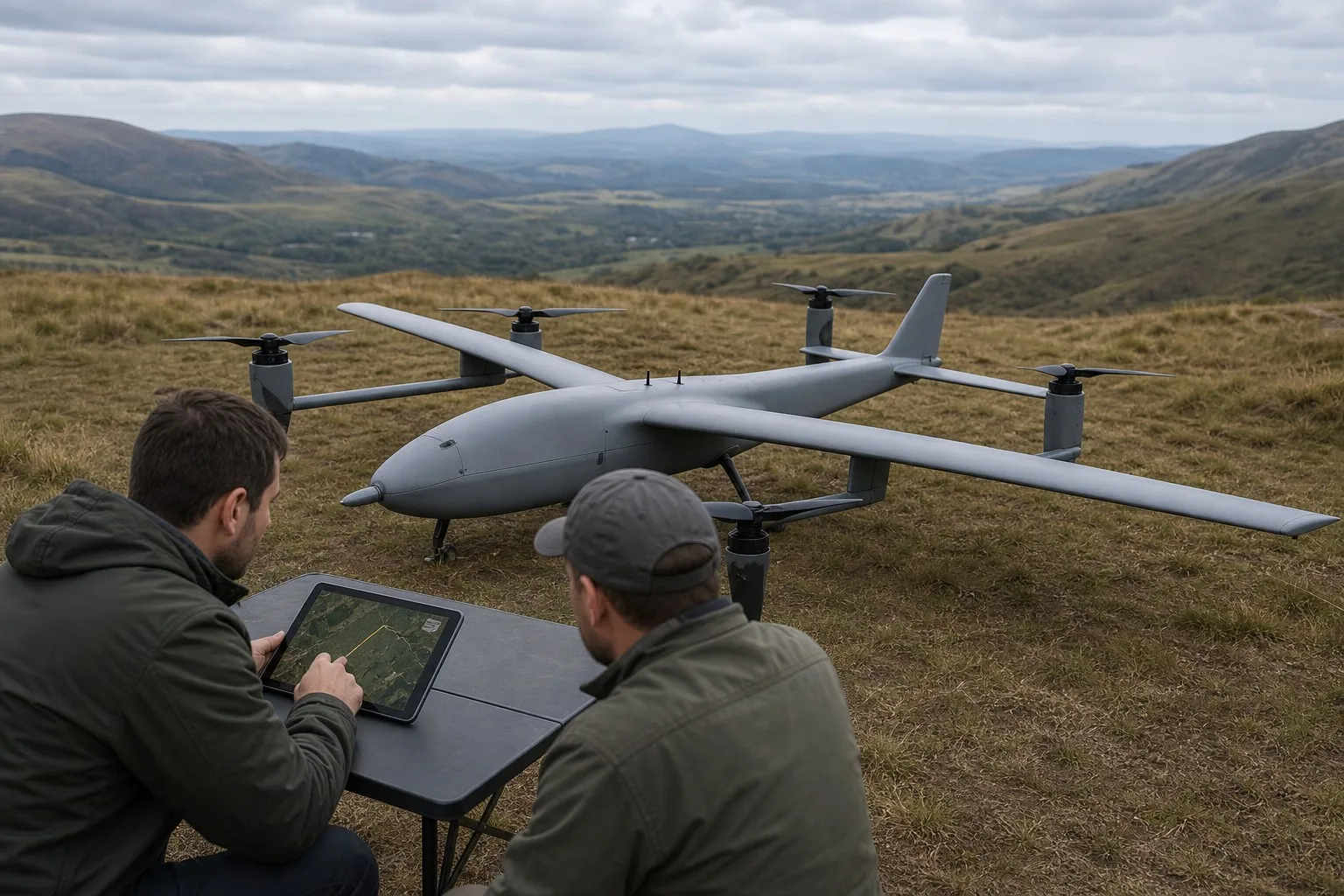
A hybrid VTOL UAV combines vertical takeoff and landing with fixed-wing forward flight. Define the mission in measurable terms, including area or route, operating radius, time on task, payload, launch and recovery site, environment, and data requirement.
- Area or route: Define the area or route to cover.
- Operating radius: Determine distance from launch and recovery.
- Payload: Include camera, thermal module, communication device, and accessories.
2. Understand What Hybrid VTOL Changes in Real Operations
Vertical takeoff and landing enables deployment without a conventional runway, while fixed-wing cruise supports longer routes. Verify transition procedures, payload and battery configuration, wind behavior, contingency procedures, and field maintenance.
3. Match Payload and Takeoff Weight Correctly
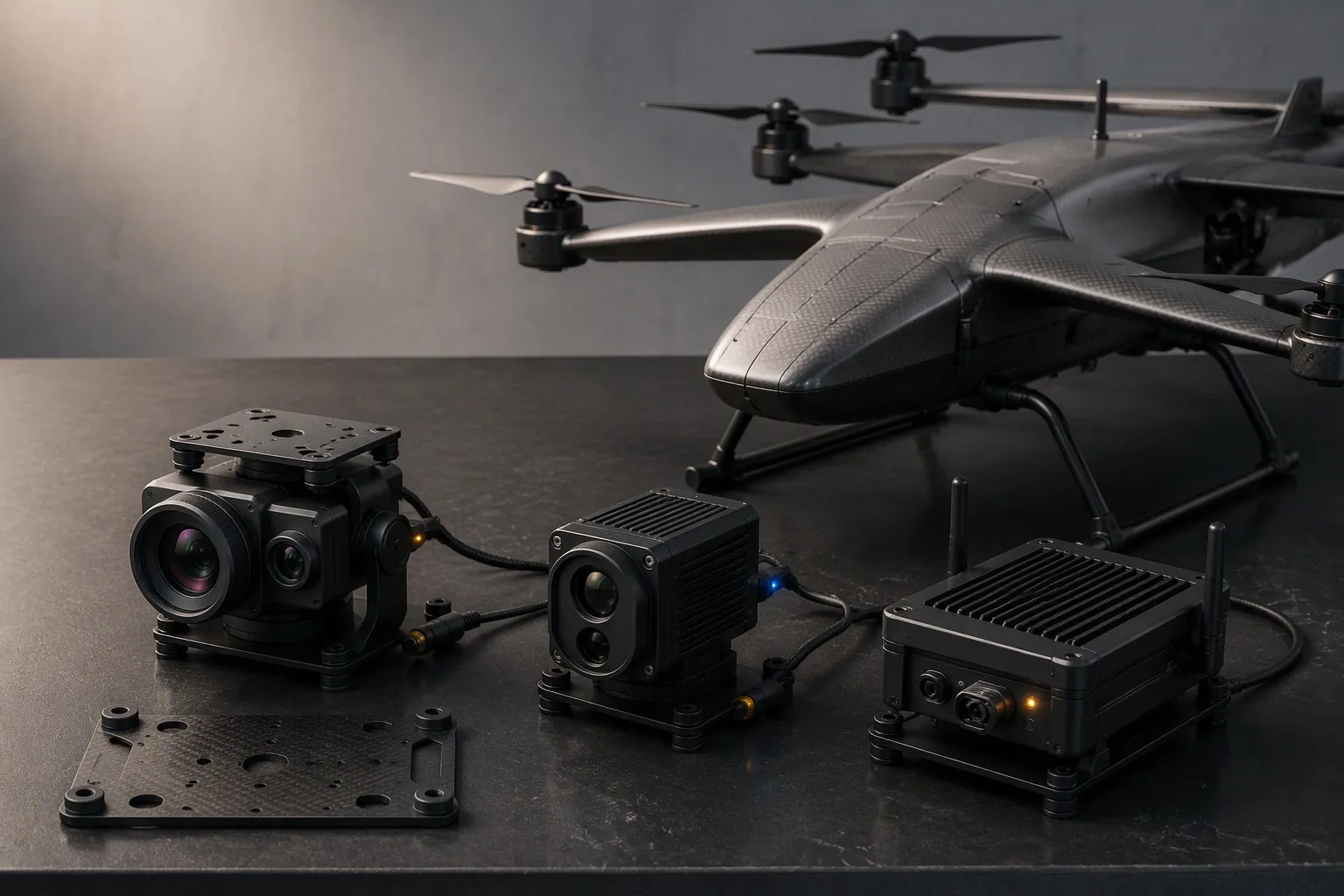
Evaluate the complete payload including gimbal, mounting plate, vibration isolation, cables, storage, power-conversion hardware, and protective enclosure. Confirm expected endurance, center-of-gravity range, and battery requirements for the intended configuration.
4. Evaluate Endurance as Usable Mission Time
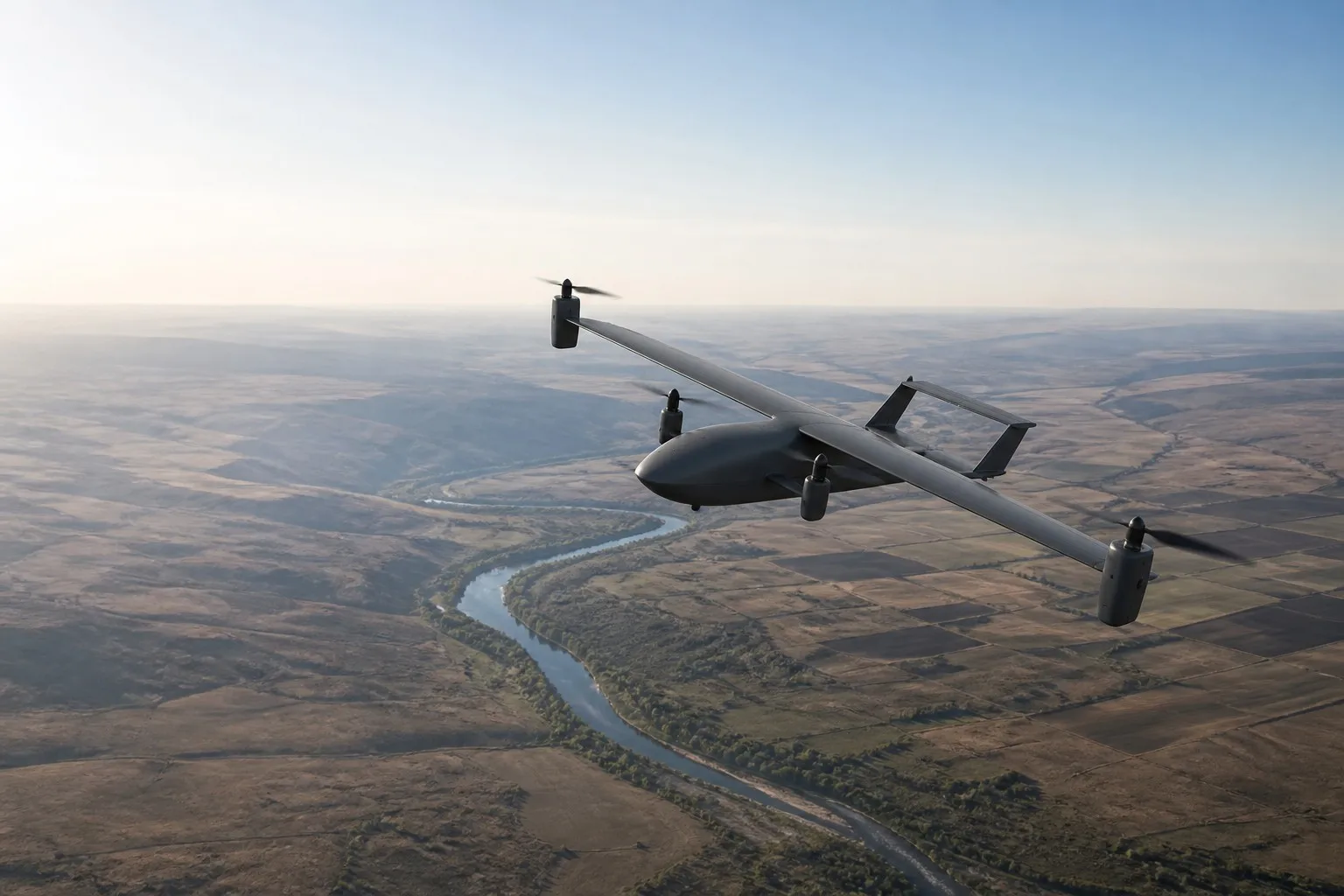
Compare no-load and loaded endurance under stated test conditions. Separate vertical takeoff, transition, outbound flight, mission work, return, landing, and safety reserve when calculating usable mission time.
5. Select the Payload and Data Architecture Together
Specify the aircraft, camera, data link, storage, ground system, power, mounting, control, and communications as one integrated package.
6. Compare Models Using a Mission-Fit Matrix
| Evaluation factor | Mapping | Surveillance | Long-range operations |
|---|---|---|---|
| Launch and recovery | Small-site deployment | Flexible deployment | Remote-site operation |
| Payload | Mapping camera and positioning | Optical, thermal or EO/IR | Sensor or communication payload |
| Endurance | Coverage per sortie | Time on task | Route distance and reserve |
7. Complete the Supplier Validation Before Purchase
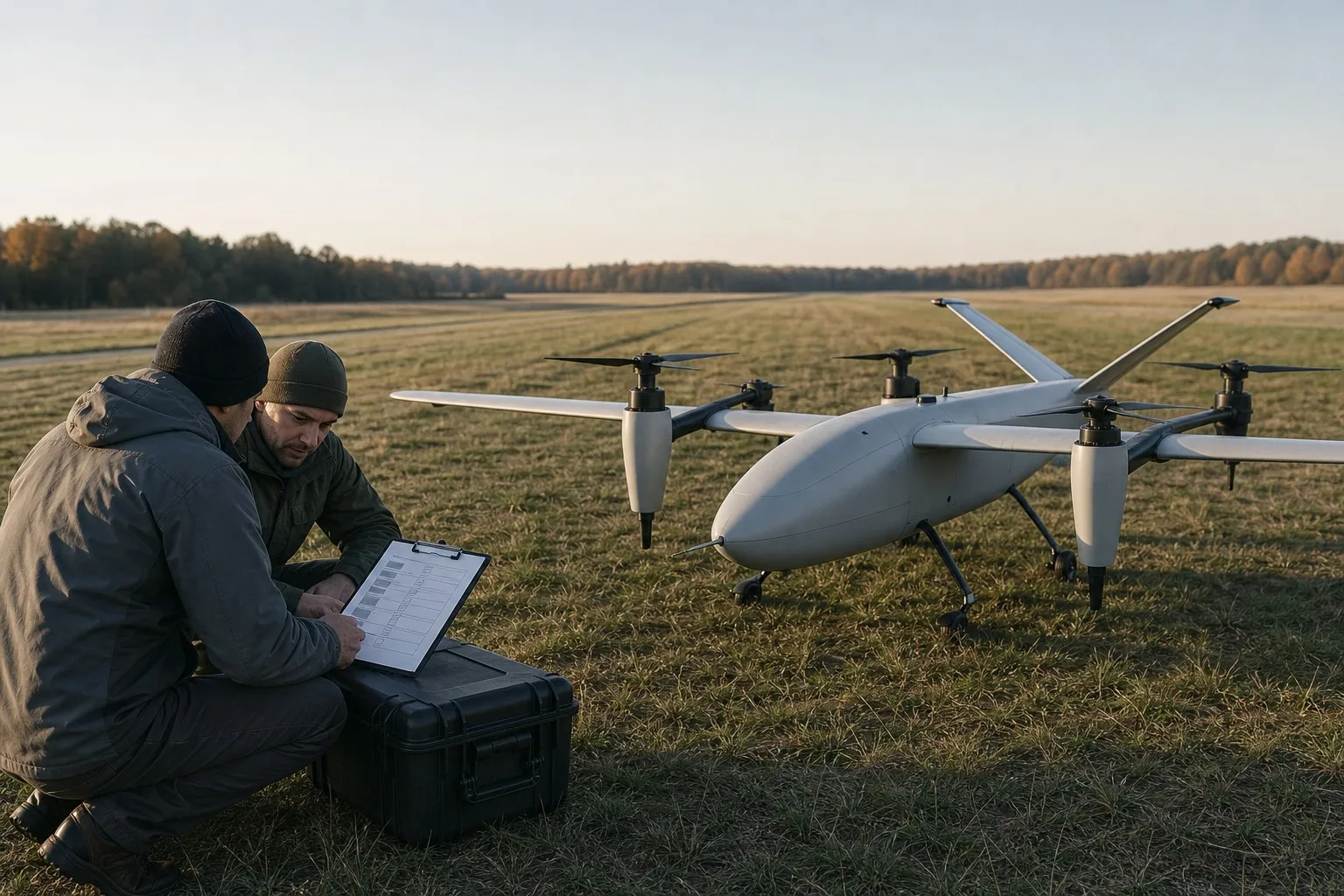
Confirm exact model, dimensions, takeoff weight, battery, loaded endurance, procedures, weather limits, control configuration, payload interfaces, support, and compliance requirements before purchase.
Conclusion: Choose the Platform That Fits the Whole Mission
The best hybrid VTOL UAV is the platform that completes the required mission with the intended payload, launch site, data system, weather margin, maintenance process, and safety reserve.
Frequently Asked Questions
What is a hybrid VTOL UAV?
It combines vertical takeoff and landing with fixed-wing forward flight.
Is a hybrid VTOL UAV suitable for mapping?
It can be suitable when the aircraft carries the required camera, mounting hardware, positioning equipment, battery, and data system with adequate reserve.
Keywords:
Related news
Consult Immediately
If you are interested in our products, please leave your email and we will contact you as soon as possible. Thank you!



Company Address: 1 Bldg,Tonghe Industrial park,N26.Fuping Road,Longgang District Shenzhen City ,Guangdong Province,China.


© 2024~ Shenzhen XQ-POWER Technology Co., LTD. All rights reserved.