

19
2026
-
10
How to Select a UAV Flight Controller for Multirotor and VTOL Applications


Author:
How to Select a UAV Flight Controller for Multirotor and VTOL Applications
A UAV flight controller should be selected as the control core of the complete aircraft, not as an isolated electronics module. The right choice depends on aircraft configuration, flight modes, navigation sensors, motor or servo outputs, payload interfaces, data link, power architecture, software environment, and recovery behavior after a fault.
This guide explains how to select a UAV flight controller for multirotor and VTOL applications. It covers mission requirements, airframe architecture, sensor and interface planning, software and ground-control compatibility, failsafe behavior, electrical integration, supplier questions, and staged validation.
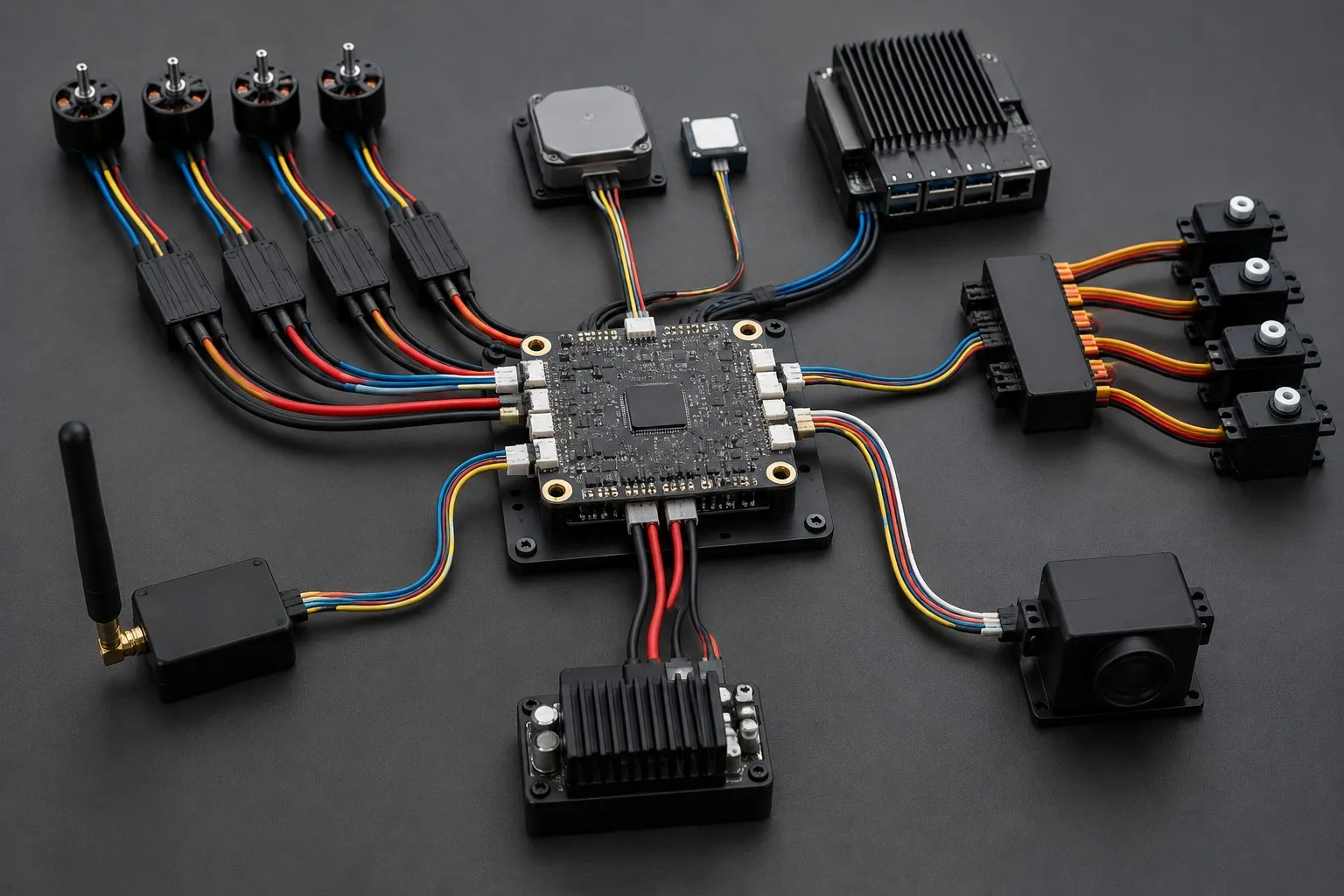
UAV flight-controller integration should be evaluated as a complete system.
1. Start With the Aircraft and Mission Requirement
The first decision is not the brand or processor specification. It is the aircraft architecture and the job the aircraft must perform. Write the requirement in operational terms before comparing candidates:
- Aircraft type: quadcopter, six-axis UAV, eight-axis UAV, fixed-wing, or hybrid VTOL;
- Propulsion arrangement and motor or actuator count;
- Control surfaces, tilt mechanisms, landing gear, payload release devices, and other outputs;
- Manual, assisted, automatic, or fully preplanned mission modes;
- Navigation sensors, positioning sources, payload, telemetry, command, and video architecture;
- Operating altitude, speed, temperature, vibration, weather exposure, maintenance, firmware, logging, and support requirements;
- Required responses to low battery, positioning loss, sensor disagreement, or communication loss.
A survey multirotor may need stable position hold, accurate route execution, and reliable payload triggering. A VTOL aircraft may need separate hover, transition, and cruise-control functions. Define what the aircraft must still do when a nonessential subsystem fails, because these decisions determine interfaces and failsafe configuration.
2. Match the Controller to the Airframe Architecture
Multirotor applications
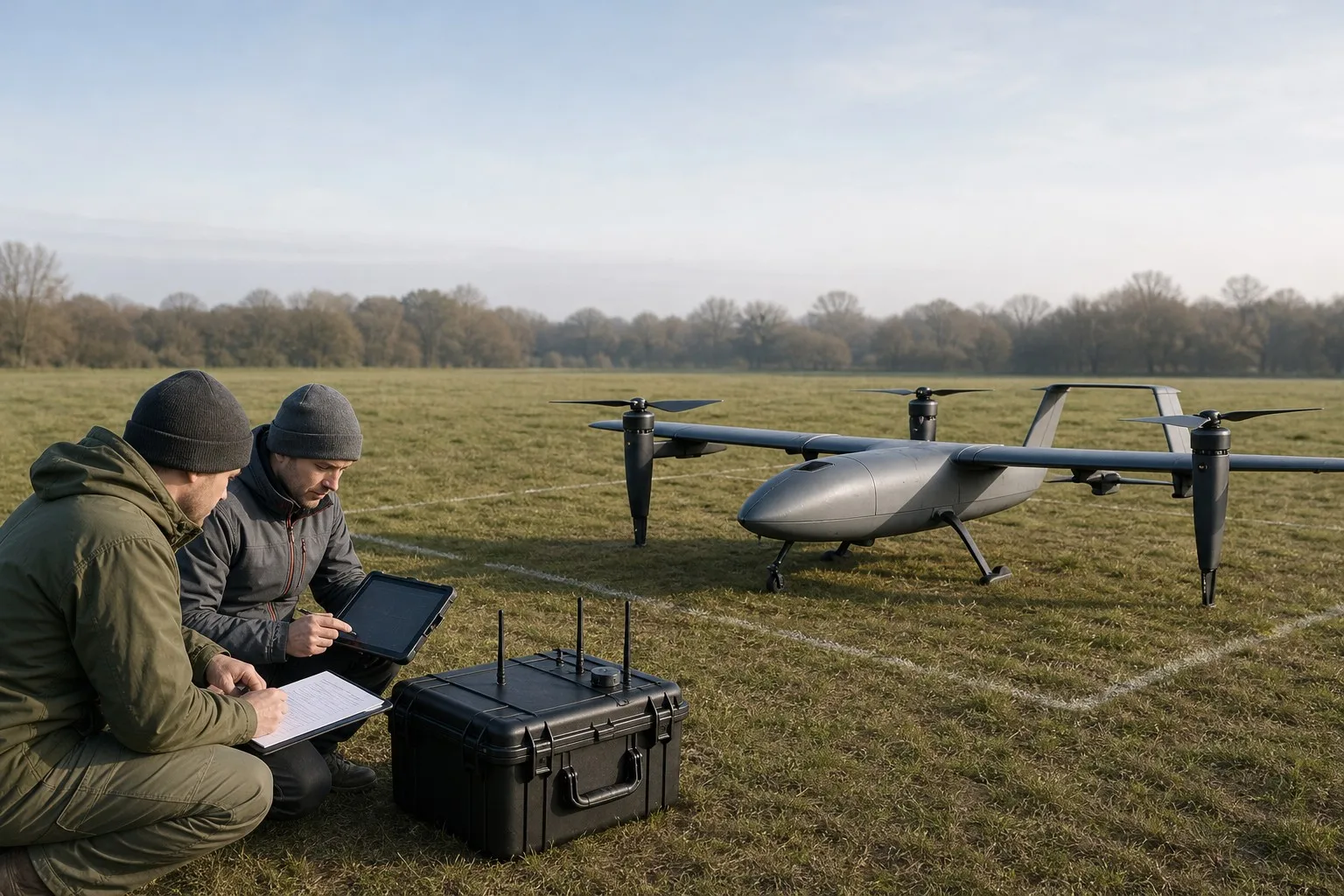
A multirotor controller manages propulsion outputs for roll, pitch, yaw, and vertical motion. Confirm supported frame layouts, motor-output count, ESC signal type, refresh behavior, motor-order configuration, calibration, and behavior when a motor, ESC, power path, or sensor becomes abnormal.
Fixed-wing and hybrid VTOL applications
A fixed-wing or hybrid VTOL aircraft adds control surfaces and flight phases. It may require vertical lift motors, fixed-wing cruise propulsion, elevator/rudder/aileron servos, tilt mechanisms, and landing equipment. Confirm transition timing, airspeed or attitude criteria, actuator mixing, abort conditions, and return-to-home behavior during phase changes. FEIYIDA fixed-wing references include FYD-U2022, FYD-U2025, FYD-U2032, FYD-U2035, FYD-U2036, FYD-U2037, FYD-U2039, and FYD-U2051; compatibility must still be confirmed for the exact airframe and firmware.
3. Compare Flight Modes, Navigation, and Sensor Requirements
Review the intended modes in groups:
- Manual or stabilized control;
- Altitude or position hold;
- Automatic takeoff and landing;
- Route, waypoint, orbit, survey, corridor, or inspection missions;
- Return-to-home and recovery behavior;
- VTOL hover, transition, cruise, approach, and landing;
- Payload-triggered missions or camera-event synchronization.
List the required inertial, barometric, satellite-positioning, compass, airspeed, range, external-navigation, and onboard-computer inputs. Ask how sensor health, calibration, disagreement, degraded data, and positioning loss are reported. Sensor placement also matters: keep compasses away from high-current wiring, mount inertial sensors rigidly, and protect the barometer from unsuitable airflow.
4. Evaluate Outputs, Interfaces, and Payload Integration
Before ordering, draw a connection map for every device that exchanges information with the controller:
- Motor outputs and ESC connections; fixed-wing servos; VTOL lift motors and tilt mechanisms;
- GPS, compass, airspeed, range, and auxiliary sensors;
- Telemetry radio, ground-control station, camera, gimbal, thermal sensor, and optical payload;
- Onboard computer, battery monitor, power module, and mission-payload actuator.
For every connection record physical interface, voltage level, signal direction, protocol, update behavior, connector type, and configuration requirement. Do not assume compatibility from a familiar connector. A camera may need trigger, gimbal commands, video transport, metadata, and separate power; a release mechanism may need PWM, serial, or network control.
5. Check Power, Wiring, Vibration, and Thermal Conditions
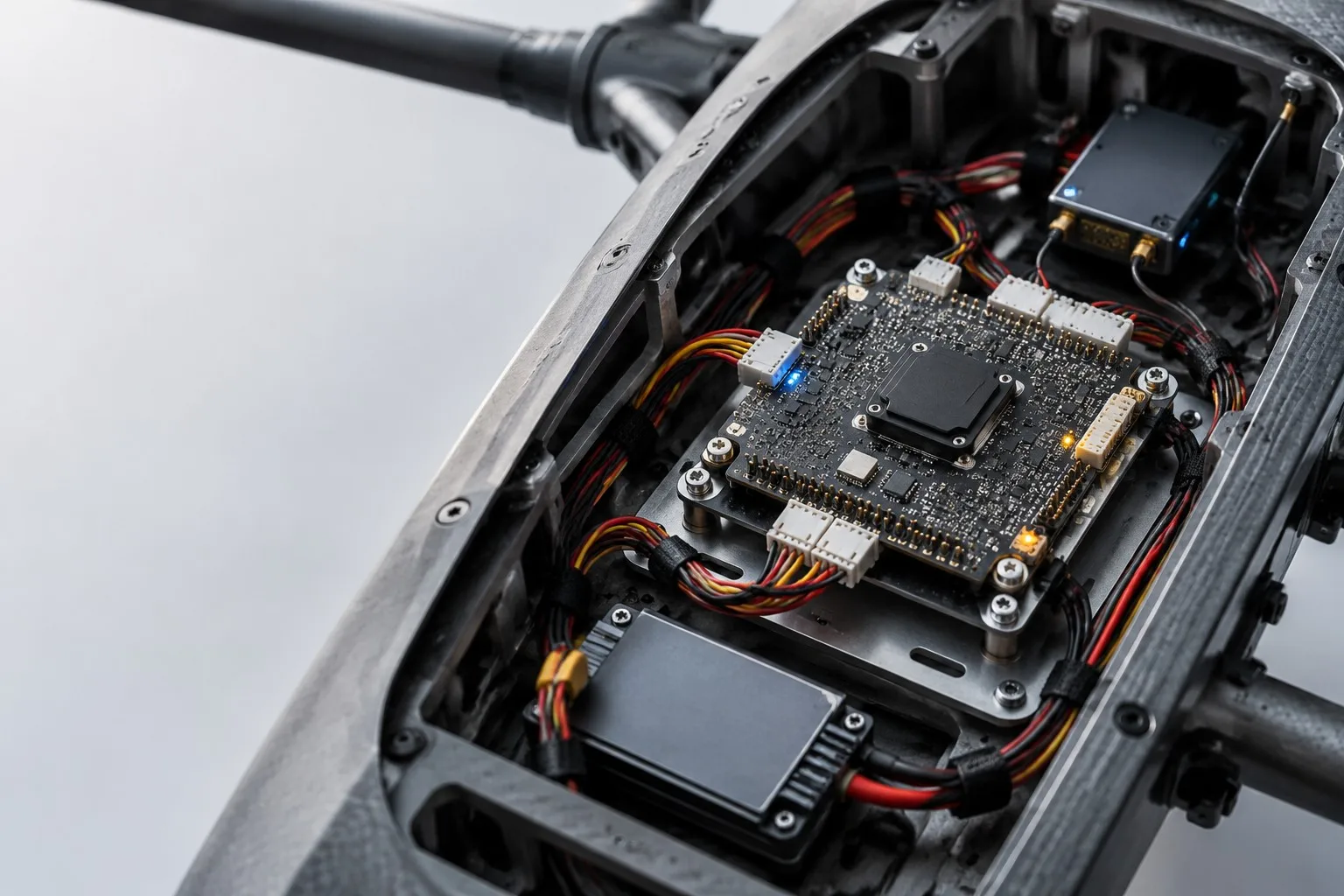
Confirm input voltage, acceptable range, current demand, power-module arrangement, regulation, grounding, cable routing, connector retention, strain relief, polarity protection, vibration, temperature, moisture, and service access. Measure voltage at the controller under realistic motor starts, servo movement, payload activation, radio transmission, and end-of-mission battery conditions. Review heat sources, airflow, enclosure, and proximity to batteries, ESCs, radios, and computing modules.
6. Review Software, Ground Control, and Failsafe Behavior
Confirm ground-control software, firmware updates, calibration workflow, mission planning, log format, parameter backup, and configuration change records. Review the response for each fault domain:
- Communication loss, low battery, or power warning;
- Positioning loss, compass or sensor disagreement, and geofence violation;
- Excessive attitude, speed, or altitude;
- Payload or companion-computer failure;
- VTOL transition failure and motor, ESC, servo, or actuator abnormality.
A multirotor may return, land, or hold; a fixed-wing aircraft may orbit or return; a hybrid VTOL may need a special decision about continuing fixed-wing flight or vertical landing. The correct behavior must be defined, configured, and tested.
7. Select the Right Category and Confirm Exact Compatibility
FEIYIDA organizes Flight Controller products into DJI, CUAV, and Pixhawk categories. These are useful starting points, but a category label is not a compatibility statement. Ask the supplier to confirm airframe type, motor/ESC/servo allocation, firmware, sensors, data link, payload and companion-computer interface, power module, mounting dimensions, connector pinout, VTOL logic, failsafe behavior, and test configuration.
| Evaluation area | Questions to verify | Evidence to request |
|---|---|---|
| Airframe | Which multirotor layouts and VTOL architectures are supported? | Frame and actuator mapping |
| Interfaces | Which ESC, servo, sensor, telemetry, and payload protocols work? | Pinout and wiring diagram |
| Software | Which firmware, ground station, missions, and logs are supported? | Version and configuration notes |
| Safety | How are communication, battery, navigation, and transition faults handled? | Documented failsafe test results |
8. Validate the Flight Controller in Stages
Documentation and configuration review
Confirm model, firmware, parameter file, wiring diagram, sensor list, output mapping, ground-control software, backup procedure, test owner, and pass criterion.
Bench and power test
Connect the real power module, battery monitor, data link, sensors, ESCs, servos, payload interfaces, and companion devices. Verify voltage, current, sensor detection, output mapping, calibration, logging, communication, restart behavior, and connector temperature.
Actuator, ground, and restrained tests
Verify motor order and direction, servo direction, control-surface travel, tilt movement, landing gear or release behavior, safety interlocks, vibration, sensor health, telemetry, mode changes, battery warnings, and payload operation.
First-flight and mission tests
Begin with conservative tests. For multirotors verify hover, movement, position hold, return behavior, and payload operation. For VTOL test vertical flight, transition, cruise, approach, landing, recovery, the actual data link, payload, battery, and ground station. Record health, voltage, current, temperature, vibration, navigation, communications, mode changes, actuator outputs, and warnings.
9. Questions to Ask Before Ordering
- Which multirotor frame layouts and VTOL architectures are supported?
- How many motor, servo, actuator, and auxiliary outputs are available?
- Which ESC, servo, sensor, telemetry, and payload interfaces are supported?
- What voltage range, power module, navigation sensors, and flight modes are required?
- How are communication loss, low battery, positioning loss, and transition failure handled?
- Which ground-control software and firmware workflow are supported?
- How are parameters, logs, calibration data, mounting, thermal, vibration, and environmental requirements documented?
- Has the exact controller been tested with the intended airframe and payload, and what wiring diagrams, pinouts, manuals, and test records are supplied?
Conclusion: Choose a Flight-Control System, Not Just a Controller Board
The best UAV flight controller supports the complete mission and aircraft architecture with a clear integration path. Start with the airframe and mission, define flight modes, sensors, outputs, payload interfaces, data link, power paths, and fault responses, then confirm exact compatibility and validate the final configuration in stages.
FEIYIDA lists DJI, CUAV, and Pixhawk under its Flight Controller structure. Planning a multirotor or VTOL control system? Contact FEIYIDA with the airframe type, motor and servo arrangement, payload, battery system, required flight modes, data link, and mission profile for a configuration review.
Frequently Asked Questions
What is a UAV flight controller?
It is the onboard control system that processes sensor information, operator or mission commands, navigation data, and aircraft status, then generates outputs for motors, ESCs, servos, and other actuators.
Can one controller be used for both multirotor and VTOL aircraft?
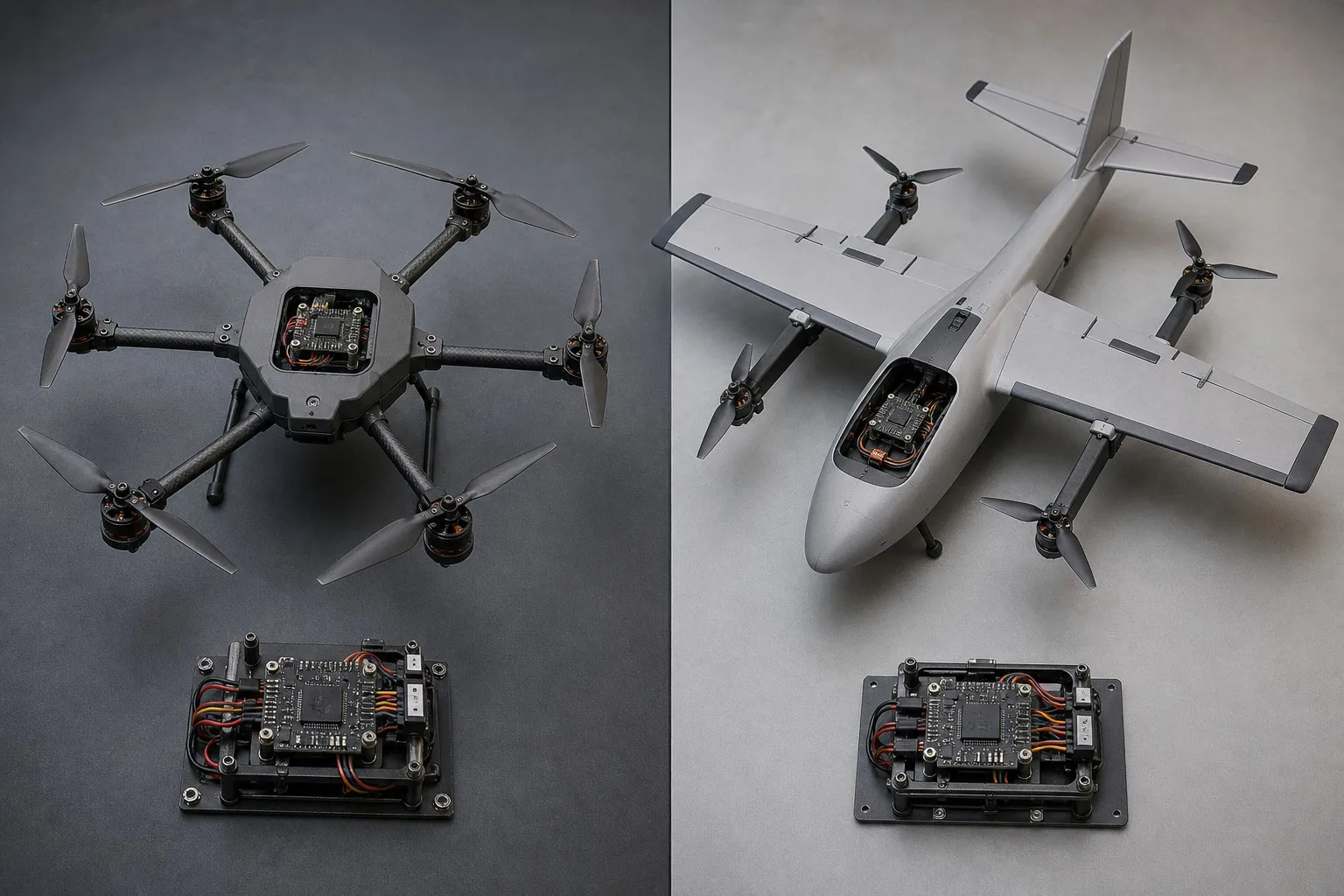
Only when the controller, firmware, sensor package, outputs, and control logic support both architectures. Enough physical outputs alone do not guarantee hybrid-VTOL transition or recovery compatibility.
What should I check before choosing a flight controller?
Check airframe configuration, modes, motor and servo outputs, sensors, interfaces, power, data link, ground-control software, payload integration, failsafes, firmware, and supplier documentation for the exact combination.
How important is ground-control software?
It supports calibration, mission planning, parameter management, monitoring, firmware updates, log review, and fault diagnosis, so it must be maintainable and supported for the intended aircraft.
How should a VTOL flight controller be tested?
Test the exact controller, firmware, sensors, outputs, power system, data link, and airframe in stages: bench, actuator, restrained, vertical flight, transition, cruise, landing, recovery, payload, and communication-loss tests.
Does FEIYIDA publish individual compatibility specifications?
The official website organizes Flight Controller products into DJI, CUAV, and Pixhawk categories. Compatibility for a specific UAV, payload, firmware, or VTOL configuration should be confirmed for the exact system before purchase.
What information should I send for a recommendation?
Provide airframe type, motor and ESC arrangement, servo and actuator count, battery voltage, payload, sensors, data link, ground station, desired modes, environment, and mission profile.
Can a flight controller replace a video or data link?
Not necessarily. It may exchange telemetry and command data while another system carries live video or high-volume payload information. Define control, telemetry, payload, and video functions separately.
How do I know if integration is ready for deployment?
It is ready only after the exact configuration passes documented bench, ground, controlled-flight, mission, and recovery tests covering sensors, power, actuators, navigation, communication, failsafes, payload, and environment.
Which internal product categories are relevant?
Relevant categories include Flight Controller, Fixed-Wing Plane, Multi-Rotors, Gimbal Camera, Video & Data Link, Battery & Charger, and More Accessories.
Confirmed Internal Links
- Flight Controller product category
- DJI flight-controller category
- CUAV flight-controller category
- Pixhawk flight-controller category
- Fixed-Wing Plane product category
- Multi-Rotors product category
- Gimbal Camera product category
- Video & Data Link product category
- Battery & Charger product category
- More Accessories product category
Keywords:
Related news
How to Operate UAVs in Rain, Dust, Heat, and Chemical Exposure
How to Verify a Servo Mechanical Interface Before Installation
FYD-D4010L Agricultural Sprayer Drone Specifications: How to Read the Product Page
Industrial Servo OEM/ODM Specification Checklist for UAV, Robotics and Automation
How to Specify a UAV Mission-Payload Deployment Actuator
UAV Multi-Node Actuator Maintenance and Troubleshooting Guide
Consult Immediately
If you are interested in our products, please leave your email and we will contact you as soon as possible. Thank you!



Company Address: 1 Bldg,Tonghe Industrial park,N26.Fuping Road,Longgang District Shenzhen City ,Guangdong Province,China.


© 2024~ Shenzhen XQ-POWER Technology Co., LTD. All rights reserved.