

All News
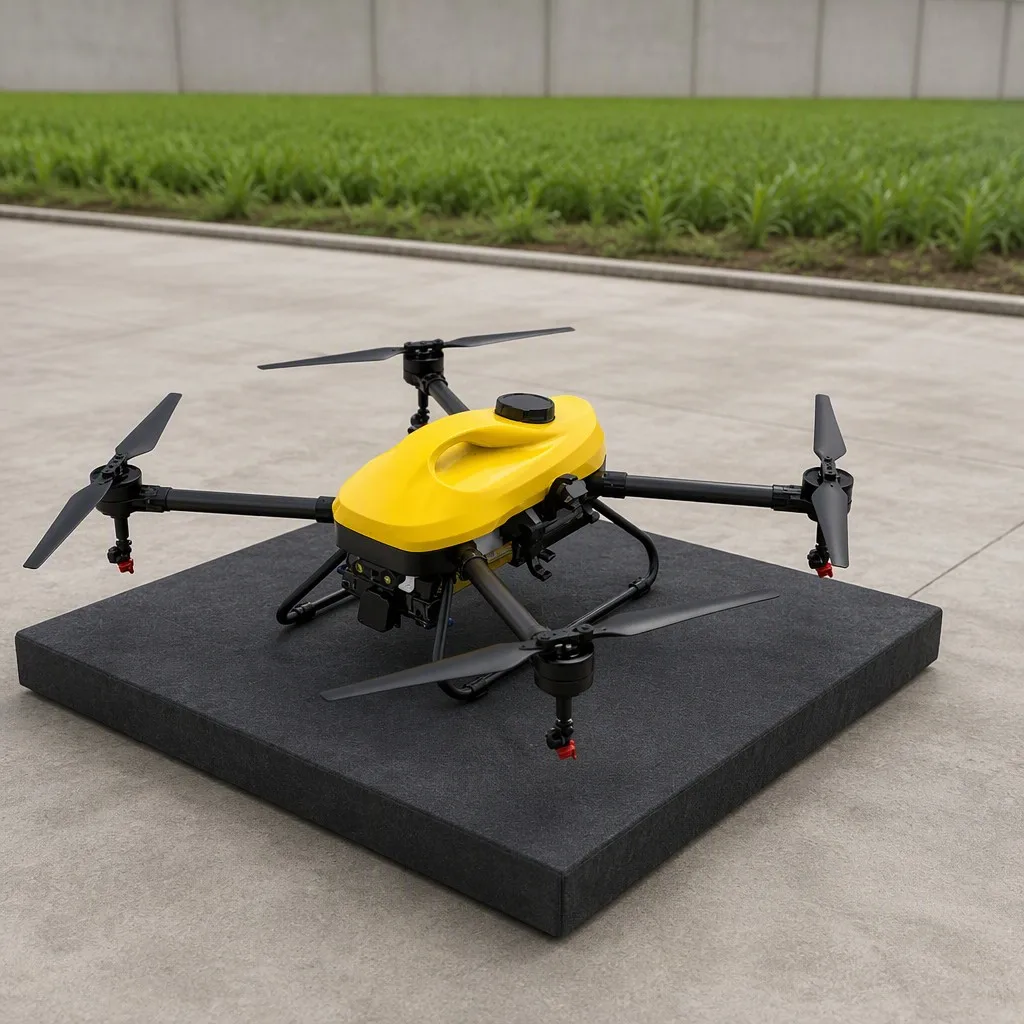
FYD-D4010L Agricultural Sprayer Drone Specifications: How to Read the Product Page
A model-specific guide to reading the FYD-D4010L agricultural sprayer drone specification fields, including tank volume, spray width, operating efficiency, voltage, working time and included equipment.
14
2026
/
10

Industrial Servo OEM/ODM Specification Checklist for UAV, Robotics and Automation
A practical industrial servo OEM/ODM specification checklist for UAV, robotics and automation projects, covering load, motion, power, interface, feedback, environment, validation and production requirements.
14
2026
/
10

How to Specify a UAV Mission-Payload Deployment Actuator
A UAV mission-payload actuator is part of a complete deployment, locking and release mechanism, so it should be specified from the mechanism rather than from a servo torque label alone. This guide explains how to define every payload state, calculate the required force or torque, separate command state from achieved mechanism state, choose between PWM, RS485 and TTL Serial Bus, design for power or communication loss, mount the actuator without using its output shaft as a structural bearing, and test the mechanism from unpowered checks to representative-load, lock/release, vibration, integrated-system and environmental validation. It uses the publicly documented XQ-POWER RS460, RS8125D and BLS8135TTL product references without inventing controller compatibility, bus speed, node count, release force, payload mass, deployment time, protection limits or whole-aircraft reliability.
12
2026
/
10

UAV Multi-Node Actuator Maintenance and Troubleshooting Guide
A UAV multi-node actuator system should be maintained as an embedded motion network rather than as a collection of independent servos. This guide explains how to classify a symptom into five fault domains — communication, power, mechanical, thermal, and environmental and service — and how to preserve evidence, verify voltage at the actuator connector, confirm the exact protocol and node identity, isolate one network segment at a time, inspect the mechanical load path, compare commanded and reported position, test timeout and recovery behavior, and review temperature, current and duty cycle. It uses the publicly documented XQ-POWER RS460, RS8125D and BLS8135TTL product references without inventing controller compatibility, bus speed, node count, timeout duration, protection limits or whole-aircraft reliability.
12
2026
/
10

How to Select a Fixed-Wing UAV Control-Surface Actuator
A fixed-wing UAV control-surface actuator should be selected from the complete load path rather than from the aircraft’s total payload or a single servo torque number. This engineering guide explains how to define aileron, elevator and rudder load conditions, calculate hinge and linkage torque, evaluate servo-arm and control-horn geometry, check backlash, voltage, mounting stiffness, response and temperature, and validate the final actuator and linkage on a representative fixture. It uses the published Feiyida XQ-BLS8175D reference (6.0–8.4V, 53/65/75kg·cm, 0.13/0.11/0.08sec/60°, 210° limit angle) as a high-torque servo reference only, and keeps the differing Feiyida and XQ-POWER speed and environmental descriptions separate without inventing airspeed, aero load, flutter margin, control precision, flight time or certification.
12
2026
/
10

How to Build a VTOL Fixed-Wing Power Budget for Hover, Cruise and Transition
A hybrid VTOL fixed-wing power system should be budgeted by flight phase rather than by one maximum-current number. This guide explains how to separate vertical takeoff, hover, transition, cruise, climb, descent and reserve; how to relate motor KV, ESC reference and battery voltage to a measured phase-specific energy budget; and how to size and validate servo and actuator power. It uses the customer-provided planning reference (2-4 x 2216-2814 disc motors at 920-1200KV, 40-60A ESCs, BLS8175D for nacelle or nose-wheel steering) and the published XQ-BLS8175D reference (6.0-8.4V, 53/65/75kg-cm at 6.0/7.4/8.4V, 0.13/0.11/0.08sec/60 deg, 210 deg limit angle) without inventing thrust, propeller, battery-cell, current, flight-time, range, speed, payload or transition-success figures.
10
2026
/
10



Company Address: 1 Bldg,Tonghe Industrial park,N26.Fuping Road,Longgang District Shenzhen City ,Guangdong Province,China.


© 2024~ Shenzhen XQ-POWER Technology Co., LTD. All rights reserved.